Image Map
Showing posts with label Guided Reading. Show all posts

Reading Workshop Anchor Chart Mania!

Hi there, bloggers!

Hope you are here because you follow me on instagram and saw that I would be posting tonight.  

It was a great Tuesday back from our Columbus Day weekend. If you are like me, you took advantage of the extra day off to catch up on sleep and that project (or two) you had wished to get done since summer vacation.  For me this project that refused to get crossed off my "To Do" list was making a set of quality anchor charts that go along with our reading workshop language.   

Here's Winston helping me out with my weekend project.  Such a good boy.


My goal was to create three charts.

1.  Turn and Talk expectations

2.  Reading with a Partner expectations

3.  Guided/ Independent Reading Block expectations

Like many of you, I find myself saying the same things over and over to my readers during reading workshop.  Does any of this sound familiar?

"Keep you eyes on your books."

"Face your partner."

"What do you mean you didn't complete your writing in response to reading?"

"Why is your hand up now?"  For this one I follow up with "Unless it's blood, throw up, or a bathroom explosion-to-be, I'm not available."  (I'm not kidding!)

"Look at the way you are shoving your books into that browsing box."  (My books are my babies!)

I was cognizant that I needed quality picture cues to go along with my expectations because many of my multi-age readers are beginning readers as well as English language learners.  SO, here they are. 


Turn and Talk expectations include...

TWIST your legs like a pretzel.
SIT knee-to-knee with your partner.
LOOK at your partner eye-to-eye.
Partner 1 talks; partner 2 listens
SWITCH and take turns.

Click HERE to download the picture symbols for my "Turn and Talk" anchor chart.

I'd like to note that I have a list of partner 1 and partner 2 names.  Partner 1 is stronger, academically and talks first and sets the expectation.  Partner 2 follows up.  Thanks Joia, for this tip!


Reading Partners expectations include...

SPEAK clearly.
LISTEN carefully.
Take TURNS reading.
Stay on TRACK with your books.
SIT shoulder-to-shoulder, elbow-to-elbow.
ASK questions to clarify what your partner means.
HELP each other figure out tricky parts.

Click HERE to download the picture symbols for my "Reading Partners" anchor chart, too.

After my mini lesson, I pull my guided reading groups (along with my awesome teaching partner Ms. Hill and literacy specialist Mrs. Lowd--insert "raise the roof gesture").  Our readers, not in a small group,  independent read, work on phonics activities, and read with a partner following these expectations.  I really think the position of the partners is so important for management purposes.  Also, it allows for the words to subliminally "sink in."  Fluent readers reading to less fluent readers works wonders.


Here are my Guided Reading expectations.  I made two columns.  The eye depicts what it "looks like" and the ear depicts what it "sounds like."  My readers came up with these suggestions during a reading workshop launch lesson.  Based upon my school's model of continuous progress, I have had many of the kids I share last year--you totally can tell.  They are rockin' the reading workshop lingo.  Here's all three anchor charts featured in my library.  My next chart is going to be Rug Expectations...we need them.  Have any suggestions for me?  YIKES!

Teacher Appreciation Freebies Roundup


Happy Teacher Appreciation Week to all my blogging buddies and teaching friends.  I hope your week has been warmed by many "gifts."  Whether they be a smile, a homemade card, or an extra hug, I know your students appreciate each and every one of you.  You have made a mark, sparked a memory and have forever helped shape the future!  Give yourself a pat on the back for a job well done.

Teacher Appreciation Week may be coming to an end, but the celebration isn't over yet!  Teaching Blog Roundup is teaming up with 20 of the best blogs to host this Teacher Appreciation FREEBIES Roundup blog hop.


Thanks for stopping by my blog!  I would like to show my appreciation with this great freebie for you.

First, I'd like to give a special thank you to Teresa from Fun in K/1 for inviting me to join this inspirational group of bloggers.  Now, on to my Freebie.  I'm actually pretty excited to share with you my "Read It to ME Fluency Cards."  You know when you have a project (or two, or three) hanging over your head?  A project you can't wait to complete so that you can use it with your students?  Well, my newly created set of fluency cards is exactly this type of project.


These cards are hot off the press!  I'm laminating them right as I am typing this post.  You use these to jazz up your guided reading. When it's the part of your guided reading lesson when your students need to read, pick a card to give them a way to sound while reading.  For example, they may read like a robot, like they have a cold, like they are a rapper, like they are a karaoke star, etc.  I am pleased to have put together 28 fluency cards to try out.  I already know my first graders will love these!

In addition, I plan to use these cards for buddy reading.  Each pair of reading buddies can select a card and read to their partner following the card's description.  Check out some examples.


Click HERE to download your fluency cards.  

I have ideas ready to go to make a part II of this item.  Let me know how they work with your readers.  I love your feedback.  Do you have an idea for a card you'd like to share?  Leave me a comment.

I'm glad you hopped by!  If you are new to my blog and liked what you see, don't forget to follow me!  I'm on Facebook, Teachers Pay Teacers and Pinterest.  

Now head over to Preschool Wonders to roundup the next FREEBIE!

We Appreciate you!


Mr. Giso's Room to Read's Bright Idea #8

Make a Class Set of Literacy Frames


Linda Hoyt is a personal favorite of mine.  She is the well known author of such books including Revisit, Reflect, Retell, Exploring Informational Texts and Make It Real.  You will find each of these three titles in my professional library.  This tip comes from Hoyt's Revisit, Reflect, Retell book-- both the older and the most recent addition should have it.  

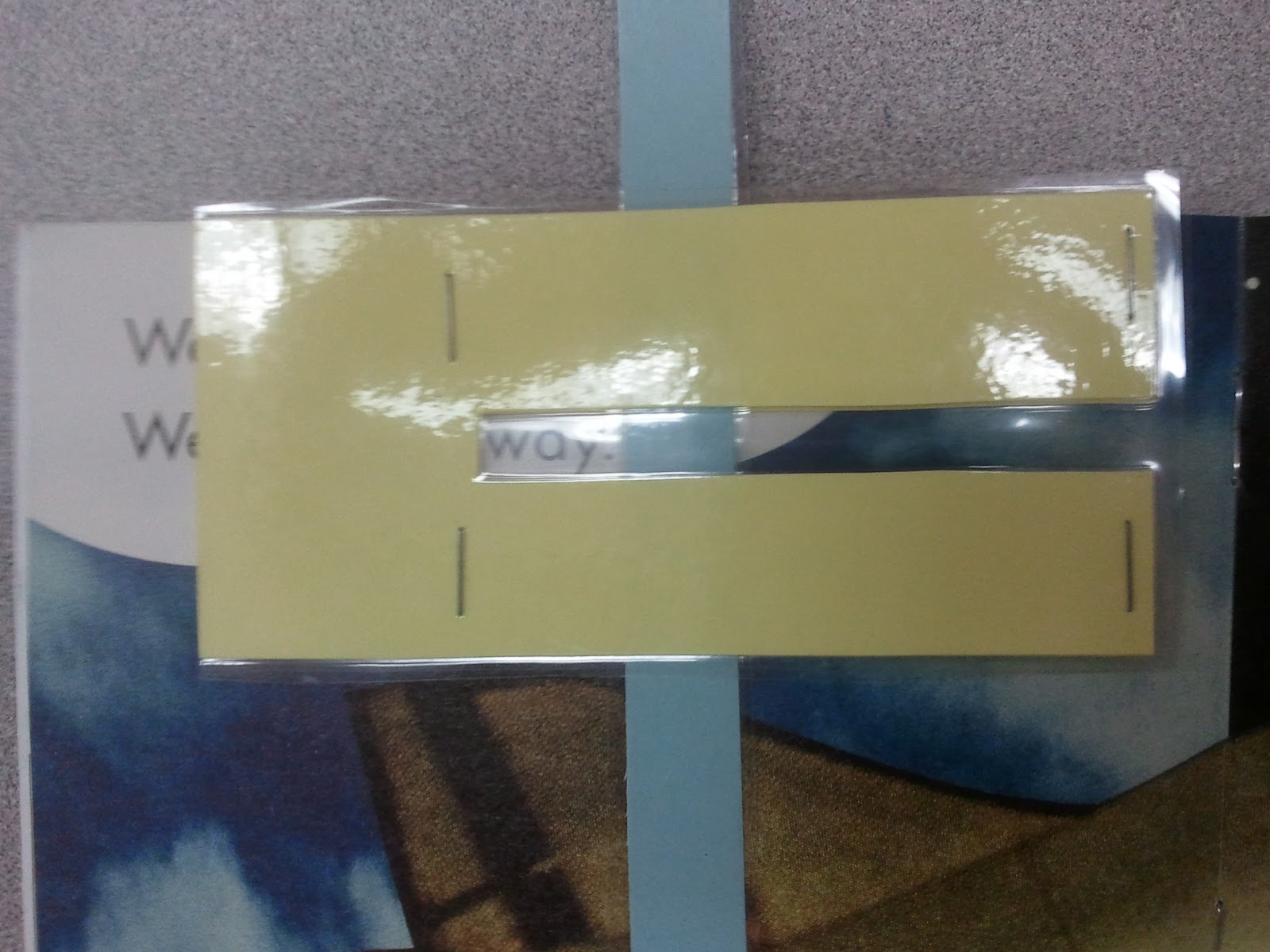
She suggests using these "Literacy Frames" to serve as a visual for children to really look at a word that happens to give them trouble.  We often tell children to "sound it out" (as long as it's not a sight word with irregular spellings).  Many times we instruct readers to look for patterns in words such as "chunks" and "word families."  We may even see if the children can find what I call a "baby alert."  This is a smaller, "baby" word found in a larger word. such as seeing the word "cat-" in the larger word "catcher." Also, it's always a great idea to encourage children to use what they know about phonics.  Can they find a blend (cl-), digraph (-th), ending (-ing), etc.?

The "Literacy Frames" let readers interact with unknown words by first framing the word in its entirety and then honing in on the parts of the word that the children can decode.  It works because it's concrete!  As they sound out, they maneuver the frame.  Let's look at an example.


Say a student comes to the word "away" in the above text and is unfamiliar with the word.  To be successful, we must show the student how to dissect this word.  The "Literacy Frame" works by framing perhaps the "-ay."  The student may say "I know this says /ay/ because I know the word 'day.'"  "-ay" would be framed.  A child may also frame the first letter "a" and note that it either has a long or short sound.  In addition, the child may frame the word part "way" and read that first [see below], thus verbalizng that placing an "a" in front of "way" results in "away."  By maneuvering the frame, the child fully understands word attack strategies in a much more hands on manner.


I call these valuable tools our "Word Framers."  I have a box of dozens of them in my guided reading supply shelf.  Each time we read in guided reading, student take one.  Also, students know they can get up and get a "Word Framer" whenever they wish throughout the day.  I have sent these home with parents to use with at-home reading, have used them in reading clinics, tutoring, teacher training and in interventions.  They work really well!  I have a large size "Word Framer" [see top photograph] for me to model how to use the "Word Framers" by reading a big book or a chart.  Click here for a pdf file with the directions.  

Ever wonder if there is anything else you can say to your reader(s) besides "Sound it Out?"

One of the most popular questions I get from parents is, "What do I tell my child when s/he asks me what a word says?"  Often teachers realize "Sound it out!" does not make much sense...especially for the many "rule-breakers" in text.  You can't sound out words with silent letters for example--they don't make a "sound!"  

My advice to this common concern is to explicitly teach and model for readers strategies they can pull from their Good Reader's Toolbox--one at a time of course!  It's not good enough to expect them to remember these strategies (chunking, skipping and rereading, getting your mouth ready, etc.) at first.  Here's where my tool comes in handy.  With these visual reminders, student will not only be able to recall strategies they can use, but will become skilled at articulating their thinking.  

Click here to get your copy of my Stuck on an Unfamiliar Word cards and template.  They are appropriate for teachers, interventionists, tutors, after school homework helpers and parents.


Oh, and as you have probably noticed, my blog is sporting a new look by Emily White Designs.  Grab my new button from the right hand sidebar.  Let me know what you think!


Guided Reading Tool Freebie

Happy Monday friends!  I have just updated cloze activities, an at home interview project for a "Now and Long Ago" unit, a colorful noun sort, a "primary friendly" editing checklist and a simple work work mat.  Best of all, I have updated my TpT store's freebie.  Here's a picture.  Just click here to get it.  This tool is perfect for Guided Reading.  It allows your readers to interact with the text in a hands on manner.  It's perfect for them to use when articulating their thinking as readers.