Image Map
Showing posts with label Bright Idea. Show all posts

Mr. Giso's Room to Read Bright Idea #15

Desk Chair Makeover


I gave my desk chair a quick 2 minute makeover.  Here, you can see my desk chair before the makeover.


All I had to do was stretch one cover over the back cushion and the second cover over the seat cushion.  Each cover has an expandable elastic and is supposed to be one size fits all.  I was skeptical at first, but it did fit perfectly with no trouble!  Take a look.


I'm honestly not sure how I stumbled upon this, but it was most likely by doing an Amazon search for "orange" for obvious reasons (it's my favorite color).  These covers are made by Deisy Dee and are described as being perfect for computer office chairs.  Click HERE to order.  Here's the final result.  


Mr. Giso's Room to Read Bright Idea #14


Make a Set of Stacking City, Country and State Cups


Well it's certainly been busy, busy, busy since we came back from February vacation.  For those of you unfamiliar with this New England custom, we have a week off for President's Day.  Spring is here, but is definitely NOT in the air, for we are getting snow and maybe a (fingers crossed) two hour snow delay tomorrow.  I have been battling a three week sore throat--along with my students and colleagues as well.  YUCK!


I started our mini unit in social studies covering "City, Country and State" today with reading the all familiar book, Me on the Map by Joan Sweeny.  If you have not used it before to introduce this concept, you don't know what you are missing.  In this book, we trace the many global "addresses" of a young girl from Kansas.  Students are easily introduced to the theme that "we live in many places."  The sequence of events build from the immediate location of the character (her room) to the entire world in this sequence.
•my room
•my home
•my street
•my city/town
•my state
•my country
•my world

From this read aloud, I continue my introduction by demonstrating this concept a step further using a set of those baby/toddler stacking cups.  For this concrete model, I label the following using a permanent marker--starting with the smallest cup.
•room
•home
•street
•city or town
•state
•country
•continent
•planet
I know this varies slightly from Me on the Map, but I prefer to include the terms continent and planet (rather than world).  As you can see, a set of these eight stacking cups works nicely.  My young geographers can stack and unstack the cups saying their address, their state, their country, etc.  It's great practice whole class, small group, with a partner or independently.


After this introduction, I make a flip book that I have customized to our city, state, etc.  It's done with good old cutting out pictures and permanent marker.  Sorry, I would love to post it for you.  I did, however, really enjoy coming across these two ideas.  Look at these nesting cans featured on Teach Beside Me's blog.


You can also download (for free!!!) this concentric circle idea from Courtney Quinlan by clicking HERE.


Please share other ideas you have on teaching this popular social studies concept.  I'd really enjoying hearing about them.

Mr. Giso's Room to Read Bright Idea #13

Make a Classroom Tree

This weekend I came across a really neat idea of making a Book Recommendation Tree thanks to a fellow blogger from Lessons With Laughter.  Click HERE to be inspired by her.  You see, this clever fourth grade teacher places this tree in her classroom and has her students recommend books to each other by filling out a tag and placing it on her tree.  I, being inspired, set out to replicate this fantastic idea.  The only thing is, I'm not sure if I want to use it for the same purpose.  For now, I have an empty tree.  Here is Molly's tree.  I love it.


Here are some pictures that show how I put together my tree.  First, I set out in my forrest, aka my backyard, to find the perfect branch.  As you can see, I had my choice.  Feel free to stop on by to get a branch for yourself--it will save us on the landscaping bill.


Next, I took off the leaves from the branch and decided to use electrical tape to add on a few more small branches to make my tree a little fuller.  I knew I would spray paint over the tape anyways.


After my branch was ready to go, I placed it in an old pot of dirt and covered the pot in a plastic bag in order to prep it for spray painting.   Orange was an easy choice, since it's my classroom theme this year.  I am painting some frames too for my personal desk pictures.


While this was drying in the sun, I painted a clay pot a blue color--also a part of my classroom colors.  I used a plastic carton that had mushrooms in it to hold the paint.  It's easy to throw out afterwards with no mess.


The tree was stabilized with colored glass beads.  I made a colorful bow and attached it to the tree.  Looks fun, right?


Using my Fiskars flower punch, I punched out a series of flowers on colored paper and laminated them.  I added some fancy ribbon and my tree was complete.  Well, it is almost complete...


The only problem I have now is that I need some clever ideas to use this tree with my first and second graders.  I'd like to use it for different purposes throughout the year by using dry erase markers. Let me know any ideas you may have, please.


Happy creating.

Mr. Giso's Room to Reads' Bright Idea #12

The Wonder of Recycled Meat Packaging!


In the beginning of the school year I send home a "Mr. Giso's Wish List" to every family.  On it, includes things I need for various projects throughout the school year.  Here are some items on my list.

•paper towel and toilet tissue rolls
•tisse boxes (see this blog post)
•yarn, ribbon and string
•old greeting cards, tissue paper and wrapping paper
•magazines and newspapers
•baby food jars
•Crystal Light containers
•cleaned out cans of various sizes (see this blog post)
•anything else you think we can use

In addition to the above, I include meat containers (washed, of course)!  These things have so many terrific uses throughout the year.  Here are my two favorite ways I thought I would share with my blog friends.

#1 Use as a Dice Rolling Miracle


When my students play mathematics games, they often need to roll  dice.  This mean a lot of noise and a lot of dice falling onto the floor and ending up under shelves, tables, etc.  It also leads to many arguments over when a die rolls off the surface, is it a "do-over" or not.  By rolling the dice over a meat tray, it's quiet.  There's no need to over roll and no need to argue.


#2 Use as a No Mess Art Surface

When crafting, it can take quite a bit of time to cover surfaces with newspaper.  Plus, once you get paint all over the newspaper, it usually ends up getting thrown out to avoid more messes.  By using a meat tray as your surface, it's easy take out and easy put away!  I recycle the same trays over and over again.  It gives children a clear visual as to where they should keep their mess.


In addition, meat trays are an easy way to hold counting chips, pennies and other manipulatives that you may need to distribute to your students in small groups.  They are a must in my classroom and model recycling for my students.  What other ways do you think meat trays can be used?  

I have special shout out to Jessica Stanford for her blogging tutorial.  It guided me through the creation of my new, cool blog post "signature" below.  What do you think?

Mr. Giso's Room to Read's Bright Idea #11

Use a Hanging Closet Jewelery Organizer 
for Your Center Rotation Display

Looking for a way to display your center rotations that is quick to make, inexpensive, and (best of all) portable?  I've done magnets, Velcro, posters, pocket charts, index cards and those library card pockets that always rip--all to no avail.  I found this handy dandy jewelery organizer in a local craft store on clearance and knew I could use it for something.  They come in all sizes, shapes and patterns like this one...


When I brought it into school, I thought it would be perfect to use each row of the organizer as a center choice with popsicle sticks to display each student's name.  Since I already had my center icons, it was pretty easy to put together.  Here is what the whole thing looks like.  I can hang it anywhere.  Anyone that knows me would appreciate my being able to use the side of my easel for display purposes!  I'm not an animal print kind of guy, but it works for me.


Here's a close up of how nicely these little cards with each student's name fit into the pockets.


I have larger signs around the room (see below) that match the center icons.  Some of the clipart you see is free for teachers from Shutterstock.  Just click here to visit the website.  


Lastly, I have clipped a signed contract going over the rules for center time as we all know how crucial effective classroom management is for a successful and productive center block!  Hope this tip works for you.


In November Pattern Poems

The leaves may have been falling, but poetry was in bloom among my first grade poets this week.  Each November, I kick off our new month with the book entitled In November by Cynthia Rylant.  It's a quick, yet powerful read that really paints a picture and appeals to all five of our senses.  The running text reads like a poem.  The illustrations by Jill Kastner paint a watercolor-like tour through the images, sounds and traditions that November brings.  Trees without arms spread their branches "like dancers."  Food in November is "better than any time of the year," and animals "sleep more."


Many of the pages begin with "In November..."  This was my inspiration to make pattern poems with my first graders that paint just as clear of a picture in our minds as does Cynthia Rylant.  Another inspiration for this product was this neat dollar store find of the stationary on which we published our poems.


Here's the directions for this writing workshop.
1.  I read aloud the book and had the children recall the images that the author and illustrator described as happening "In November."

2.  I asked children if they noticed any patterns about the way many of the pages began.  They were able to, right away, tell me that the words "In November" repeat.

3.  We discussed the meaning of the word "pattern" and applied it to the fact that a poem that starts the same way, repeatedly, is called a pattern poem.

4.  Students watched me model writing a few lines of my In November Poem.  I noted how I used the book for help and also was sure to come up with my own ideas, too.

5.  Students went to their desks to complete drafts of their poems.  The template was copied on white paper.  Grab your template here--free all November.  I had picture books about Thanksgiving, fall, etc. everywhere.


6.  We had writing conferences and edited accordingly.  Thank you to my editors for all your help.

7.  Students copied their final drafts onto the template printed on the fancy fall stationary.

8.  We had a celebration!  Students read aloud their poems sitting on the author throne.  Click here to read my post on making your own author throne.  It was a Mr. Giso's Room to Read Bright Idea (#3).


I'm really happy with the results!  I hope you will be too.  I'm please to announce that I have passed the "5 Star Blogger" challenge from the Organized Classroom Blog.  Check it out!  Best wishes to all my friends for a happy and healthy Thanksgiving week!  

Mr. Giso's Room to Read's Bright Idea #10

Classroom Freebies Manic Monday
Make a Story Necklace

You may have seen this idea before.  I've created a new graphic organizer to get the most out of my students this year, as shared on Classroom Freebies, Manic Monday.  I had such great results, I wanted to share.  Like usual, I selected three books for my guided reading book groups.  Each one is fiction with a predictable narrative structure.  Check them out in this photograph.


Next, I had a group of students read "A Job for Clown" with me, another group read "Spider's Web" with my fabulous student teacher and a third group read "The Chick and the Duckling" by themselves.  I was thrilled to have an extra adult for support.  Her job was to check in with the group reading independently.

After reading was completed, we each did a minilesson on what it means to retell the important parts of the story.  We made sure to stress that you need to pick the three most important events.  A trick I like to say is pick how it began and how it ended.  THEN, pick one thing you found interesting in the middle.  This works great with my first graders.

For the next step, each child got 4 index cards.  They completed the following.
•Card 1:  Write your name, title, author, illustrator
•Card 2:  Number it "1" and draw how the book began
•Card 3:  Number it "2" and draw an event from the middle
•Card 4:  Number it "3" and draw how the book ended


Check this out!  "A Job for Clown"


Here's another example.  "Spider's Web"  How fun!  Can't you tell Spider's despair by the look in Spider's eyes in illustration #2?


Next, students used the illustrations to help them record on a graphic organizer what happened in the beginning, middle and end.  This was the new part for me.  They wrote the retelling rather than simply using the pictures to do an oral retell.  After these were checked over, the students recorded this information on the back of the matching index card (using the lines).  See. . .


Lastly, we punched holes in the cards and tied them using a ribbon.    When this was complete, I paired students up with a buddy that read a different book.  Each student read the book over to his or her buddy using a reading wand (for fluency, of course!).  Then, students used their necklaces to retell what was read for each other.  My first graders liked this part the best.  They love sharing good books with friends.  Here's my Bucket O' Reading Wands.


This project ended up taking me two days.  Click here to printout the directions and the graphic organizer.  Enjoy this month's freebie.   I'd love to hear how this works out in your classroom.  

Mr. Giso's Room to Read's Bright Idea #9

Look Who's Talking Elbow Pasta Quotation Marks

When it's time to review quotations marks, my first grade teacher neighbor loves this activity!  We have the students write sentences on sentence strips and use pasta for the quotation marks.  This lesson has not been one of my favorites because it's always a challenge for students to copy over their edited sentences with the punctuation in the correct spot.  Each year I try something new to be more effective.  This year, I think I've got it!

First, I began this minilesson with a pocket chart discussion on the rug.  We read several sentences and put in the paper punctuation.


Next, comes the new part.  I created two templates that include the punctuation in the correct places.  I had the students write a sentence about something they'd like to say.  Here's an example.


After this, I edited the sentences and had the students copy their edited writing onto sentence strips using pencil.  When this was completed, they wrote in permanent marker.  Lastly, they glued elbow macaroni for the quotation marks.  Look at these fantastic sentences!


To celebrate, each student read their quotation in our Author Throne.  I chimed in with the "said___________" part.  Click HERE for a previous post about my famous Author Throne.  If you'd like the templates and the directions, click HERE to be linked to my TpT store.  It's a pleasure to share with you this free item.

Mr. Giso's Room to Read's Bright Idea #8

Make a Class Set of Literacy Frames


Linda Hoyt is a personal favorite of mine.  She is the well known author of such books including Revisit, Reflect, Retell, Exploring Informational Texts and Make It Real.  You will find each of these three titles in my professional library.  This tip comes from Hoyt's Revisit, Reflect, Retell book-- both the older and the most recent addition should have it.  

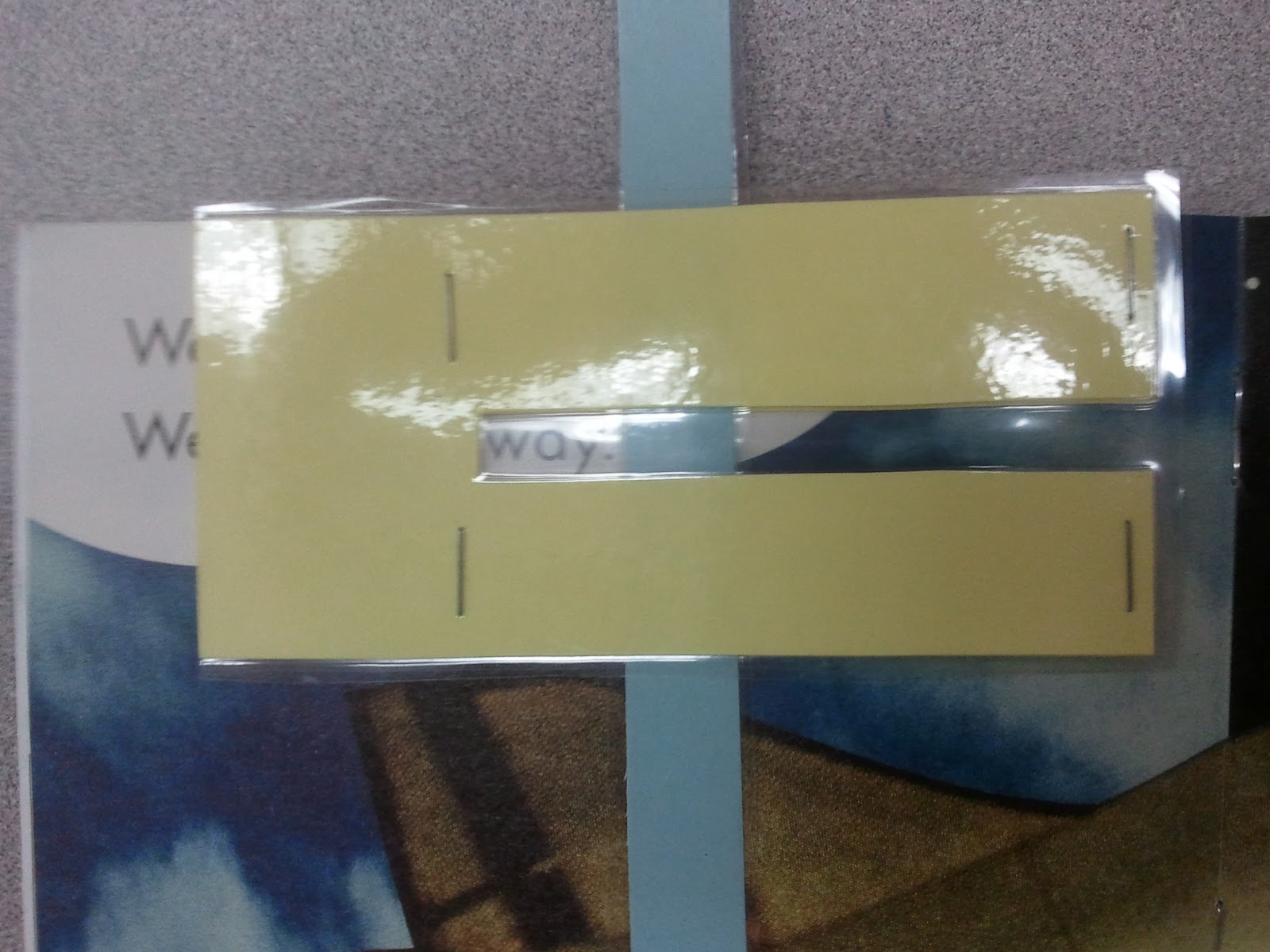
She suggests using these "Literacy Frames" to serve as a visual for children to really look at a word that happens to give them trouble.  We often tell children to "sound it out" (as long as it's not a sight word with irregular spellings).  Many times we instruct readers to look for patterns in words such as "chunks" and "word families."  We may even see if the children can find what I call a "baby alert."  This is a smaller, "baby" word found in a larger word. such as seeing the word "cat-" in the larger word "catcher." Also, it's always a great idea to encourage children to use what they know about phonics.  Can they find a blend (cl-), digraph (-th), ending (-ing), etc.?

The "Literacy Frames" let readers interact with unknown words by first framing the word in its entirety and then honing in on the parts of the word that the children can decode.  It works because it's concrete!  As they sound out, they maneuver the frame.  Let's look at an example.


Say a student comes to the word "away" in the above text and is unfamiliar with the word.  To be successful, we must show the student how to dissect this word.  The "Literacy Frame" works by framing perhaps the "-ay."  The student may say "I know this says /ay/ because I know the word 'day.'"  "-ay" would be framed.  A child may also frame the first letter "a" and note that it either has a long or short sound.  In addition, the child may frame the word part "way" and read that first [see below], thus verbalizng that placing an "a" in front of "way" results in "away."  By maneuvering the frame, the child fully understands word attack strategies in a much more hands on manner.


I call these valuable tools our "Word Framers."  I have a box of dozens of them in my guided reading supply shelf.  Each time we read in guided reading, student take one.  Also, students know they can get up and get a "Word Framer" whenever they wish throughout the day.  I have sent these home with parents to use with at-home reading, have used them in reading clinics, tutoring, teacher training and in interventions.  They work really well!  I have a large size "Word Framer" [see top photograph] for me to model how to use the "Word Framers" by reading a big book or a chart.  Click here for a pdf file with the directions.  

Mr. Giso's Room to Read's Bright Idea #7

Mystery Walker


Here's a great management idea that a graduate student of mine from last semester shared with me. (Thanks, Jenn!)  I always note how a classroom teacher's line of students is a public indication of his or her management skills--it's a preview of what goes on in his or her classroom.  If your student's are arguing, running, hopping, spinning, ripping displays off the wall, etc. chances are that there is not enough structure inside your classroom too.

This "Mystery Walker" idea is a fun way to reinforce appropriate behavior for walking in the halls of your school.  Locate some fun note paper, cutouts, etc. and write numbers depending on the number of students in your class.  I have 20 students so my cupcake cutouts (see below) are numbered 1-20.  If you assign your students numbers already based on alphabetical order like I do, you are all set.  If not, you need to assign your students a number based upon your alphabetical class list.  Place the numbers in a container.  The one pictured above was a coffee container decorated with contact paper and a label that reads "Mystery Walker."


Two or three times a week, I start the morning out by picking a number.  This person is the "Mystery Walker" of the day.  The students don't know who is the "Mystery Walker," so they all must be on their best line behavior!  At the end of the day, the "Mystery Walker" is revealed and is rewarded.  In my classroom, it's with play money to be used in Mr. Giso's Store.  Also, I have a "Wild" cupcake too.  When I pull the wild card, the whole class becomes the "Mystery Walker" and has the chance to earn a reward.  I suggest to do this periodically, as it will lose its novelty.  The goal is for your students to behave appropriately in line because it's the right thing to do--not because they may get a reward.  Use it once a week once until they meet your expectations.

On a final note, here's what good behavior in my like looks like.

1.  Each student is in his or her assigned order (always) based on last name.

2.  My line leader is always in the front.  (This job changes every Monday).

3.  Each student has his or her hands by his or her side.

4.  Students are faced forward, walking along the right side of the hall as close to the wall as possible.  

5.  There's no talking in order to not disturb other learners.

6.  Each child must hold the door (if there is one) until the student behind him or her is able to hold it.  There are no "door holders" as it interrupts the line order.

Have a great weekend everyone!